 Facebook
 X
X LinkedIn
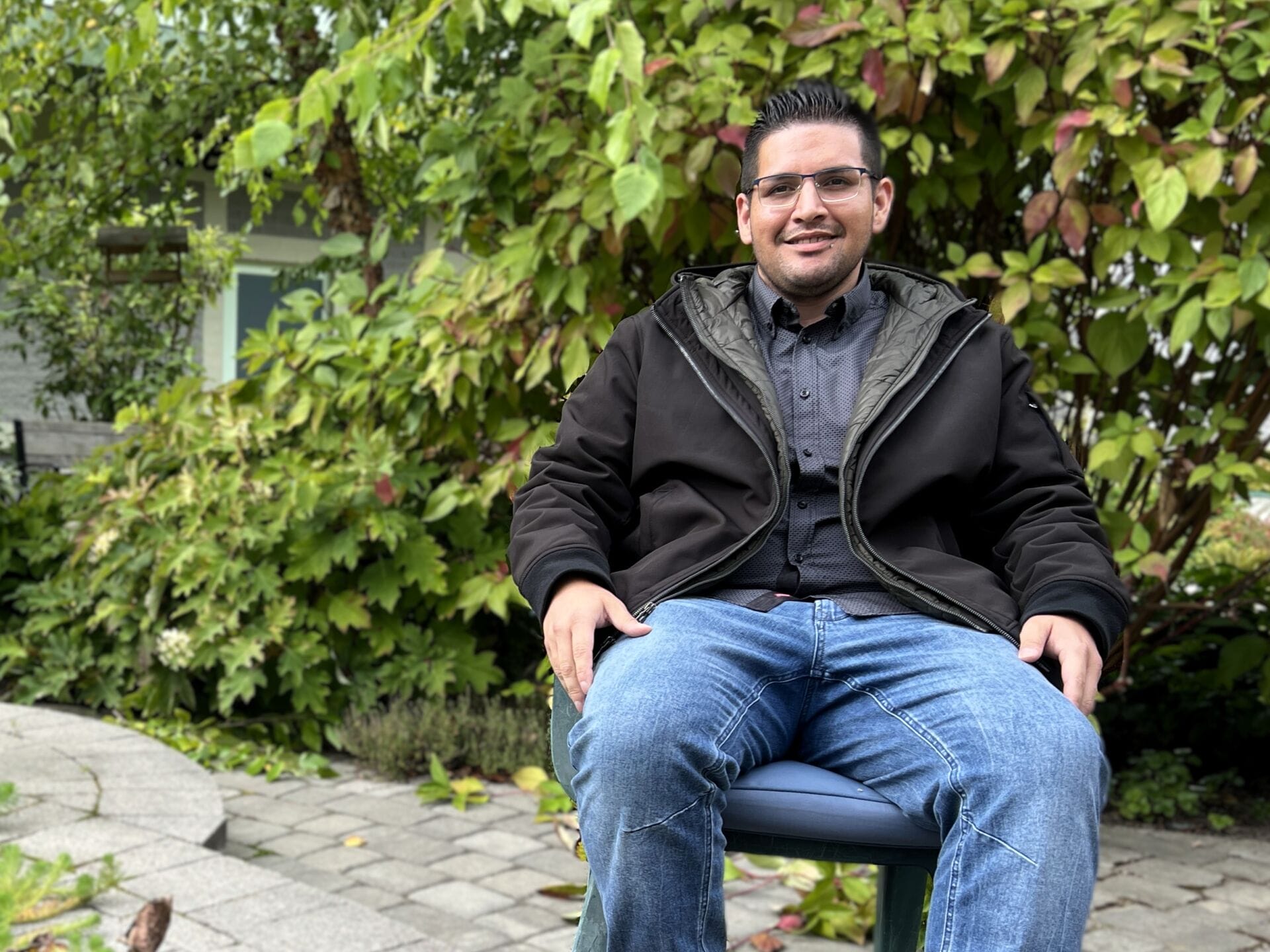
Dan’s Story
From an early age, Dan had no expectation of stability. “My childhood was chaotic,” he says.
His mother struggled with addiction, and “growing up, we moved a lot. Like, I think by Grade 2, I’d already moved 16 times and been to six schools.”
This instilled in Dan a sense of restlessness that stays with him to this day. “Throughout my life, I have a hard time staying in one location . . . every six months or so, I’ll feel a need to move.”
When he was eight years old, Dan entered foster care, which he hoped would provide the stability he was missing.
Unfortunately, his foster mother’s husband was “on a downward spiral at the time and turned into a severe alcoholic.” The foster mother — who Dan calls Grandma — had to work three jobs to support the family, which meant, “she was always at work, whether it’s in the day or night. And so it was really up to me to do what I wanted to do, because he was too drunk to pay attention.”
As the foster father’s alcoholism grew worse, he started to steal any money that Dan earned from mowing lawns to buy booze. And if Dan tried to resist, he would be beaten.
To escape, Dan began dealing drugs at the age of 13, and rented his own apartment at the age of 15.
The school system let him down, too, as he was undiagnosed with Attention Deficit Hyperactivity Disorder (ADHD).
“My foster mother was continuously contacting the school, trying to get me tested, but they just kept saying, ‘He’s fine. He can do the work. He just doesn’t want to’.”
Frustrated with school, Dan kept getting into trouble. “Got into stealing cars, and hanging out with people I shouldn’t have been hanging out with,” he says.
Until, eventually, he was kicked out. “I was just like, okay, well, if the whole point of school is to go get a job and pay bills, I already do that. Right? I sell drugs, and I pay bills. So I didn’t go back to school until I was in prison. That’s where I got diagnosed (for ADHD).”
“[Prison] was finally the first place that somebody paid attention to me. It was one of my teachers at the school there who noticed the pattern that I had a really hard time with reading, and retaining information.”
With that support, Dan managed to graduate high school with his GED diploma.
At the age of 31, after completing an 11-year prison sentence, Dan’s life slipped further off the tracks as a girlfriend’s suicide triggered deep-seated emotions surrounding the suicide of his own father when he was nine.
There had never been any counselling for that nine-year-old child, and the unearthed trauma hit the 31-year-old man hard.
“I couldn’t handle the way I felt,” he says. “I immediately resorted to drinking, but that didn’t do anything for me. I went to different drugs. Each one I went through didn’t change the way I felt, and it wasn’t until opiates I was like, okay, I don’t feel all the pain. So my opiate use went through the roof.”
From 2017 to 2022, Dan was in and out of jail, nonstop. “I couldn’t stay out for six months. And my addiction completely took over my life. The obsession to use was so great that nothing else in my life really mattered anymore. Even selling drugs for a living was no longer about trying to make money to buy nice things. It was just about not being sick.”
When he was arrested again, Dan decided he needed to try something new, and that was when he heard of Our Place’s New Roads Therapeutic Recovery Community.
“[The courts said] no, initially, because of my record,” says Dan, but he knew he needed a long-term program if he hoped to deal with all of his trauma. “So I kept fighting for it, and it took 11 months.”
Dan has been at New Roads for 21 months and has embraced every aspect of the program.
“I’m really happy that I came because the amount of work I’ve done since I’ve been here, and the things I have going on today, I couldn’t have imagined it being like this a couple years ago. Everything that I’ve been able to gain here, from the staff, from the program . . . It’s gonna carry me through the rest of my life.”
Dan is also celebrating two and a half years of sobriety, and is a leader for the peer-led programs.
“I’ve had friends who were with me in the pen, were with me in crime and addiction. And they see that I’m here, and they’re like, ‘Okay. If Bro can do this, then we can do this.’ And that’s a big thing that I want my friends in jail to be able to know. We don’t have to stay in that life just because we’ve been there our whole lives.”
For more information on New Roads, please visit the website at: newroads.ourplacesociety.com