 Facebook
 X
 LinkedIn
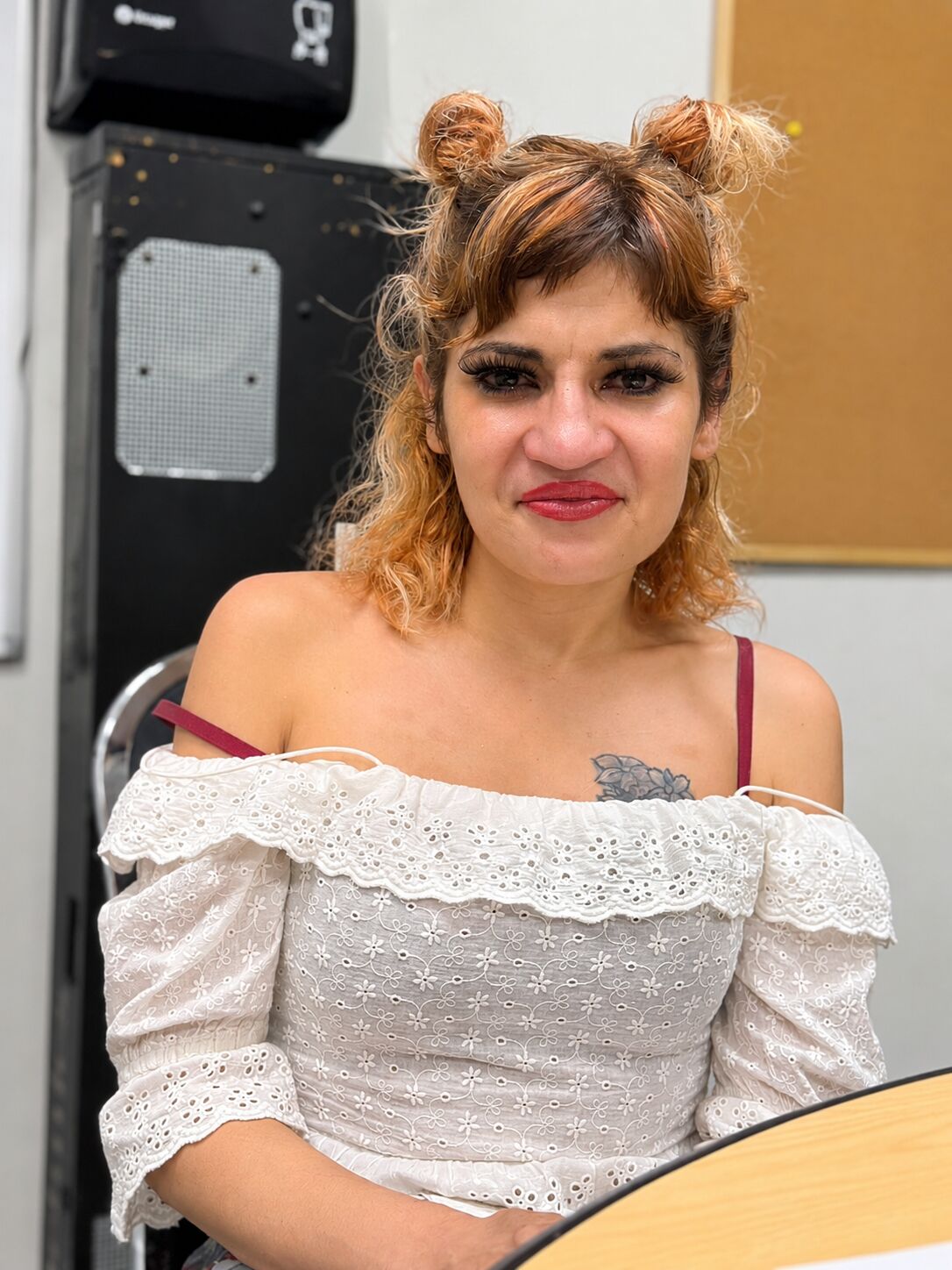
Adriana’s Story
Finding her Voice through Art and Poetry
Adriana was born in Colombia and moved to Canada with her family when she was seven years old. She grew up in Calgary and became a mother while she was still young.
Over the years, life took her in many different directions. She returned to Colombia for a period of time, where she experienced an abusive relationship. Eventually, she returned to Canada with her son and settled in Victoria with her mother.
Then came a loss that changed everything.
Her daughter died at just 12 years old from a suspected fentanyl overdose on April 14, 2021. At the time, she was reported as the youngest person to die of an overdose in B.C. during the COVID-19 pandemic.
The loss left Adriana carrying enormous grief, as well as feelings of shame and blame.
“I was really sad about my daughter, obviously, and it was really hard because everyone blamed me,” she says.
A safe place to begin again
Moving into a room at Our Place gave Adriana something she had not had in years: a safe place of her own. It was more than having a roof over her head. For Adriana, having her own room gave her space to breathe, to feel safe and, eventually, to begin finding herself again.
She started painting the walls. Then she began drawing and writing.
Art became a way for her to step away from the urge to use drugs and focus on something that brought her peace.
Our Place also gave Adriana people who believed in her.
She speaks with gratitude about a staff member, Alana, who encouraged her to keep writing, pushed her when she wanted to withdraw and supported her when she needed someone to believe in her.
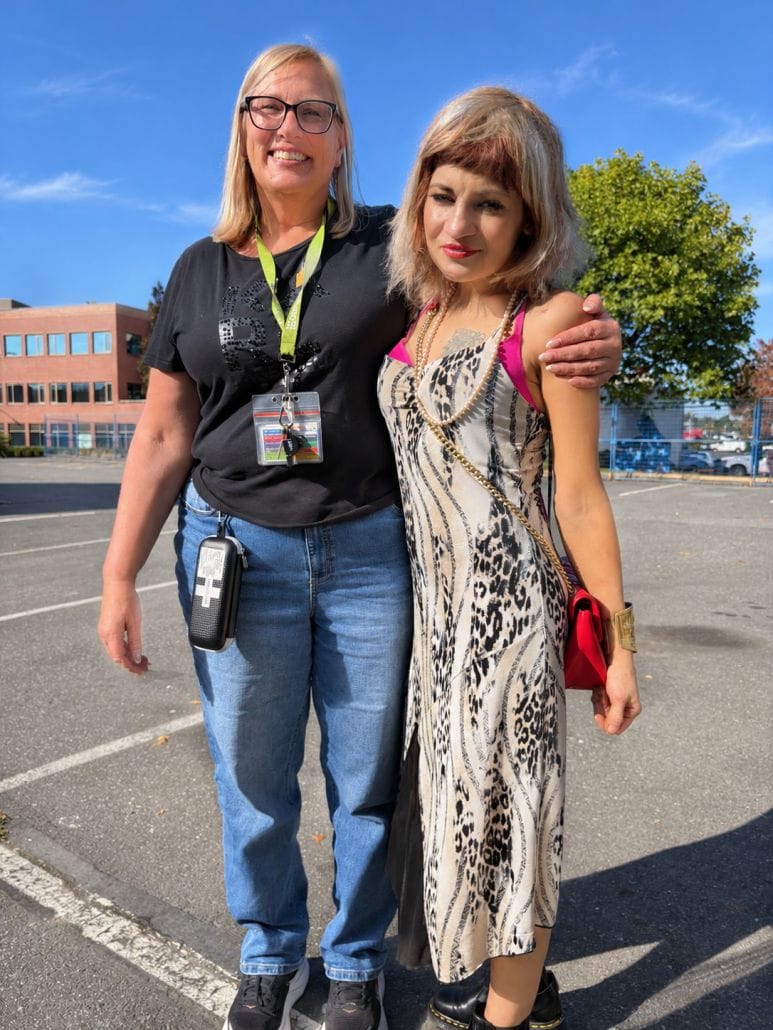
“She made me find my calling,” Adriana says. “Without her, I don’t think I would’ve even survived this place.”
For Adriana, that support went beyond a job or a service. She describes Alana as being like the mother she needed while she was away from her own family.
“She was being my mom when I didn’t have my mom here and believing in me,” she says.
Finding her voice through poetry
Adriana has loved words for as long as she can remember.
As a child, she was a spelling bee champion. When she was learning English, rhyming and writing helped her learn the language. Over time, writing became much more than a way to practice English. It became her way of expressing herself.
“Poetry is my way of expressing myself,” she says. “It’s my own language in a way.”
English is Adriana’s second language, and she says communicating verbally can sometimes be difficult, particularly when she is anxious or emotional. She can speak quickly, and she has often felt misunderstood.
Writing gives her time to slow down.
“I can slow down and write a poem and take time with it,” she says. “Now I can voice what I want to say the way I want to say it, and people are going to understand me.”
For Adriana, poetry has become a way to communicate her experiences, her feelings and the way she sees the world.
“When people read my poems, it’s like it takes you there,” she says. “It’s like a movie in a way.” It has also become a way of processing the loss of her daughter.
“Every time I write a poem, I feel like I chipped away a part of a brick off my grief wall.”
Remembering her Daughter, and looking ahead.
Adriana’s grief has also shaped what she hopes to change for others. Her daughter began using drugs in the fall of 2019. After three separate overdoses, Adriana tried to find treatment and support for her daughter.
But she says she was told there was nowhere for her daughter to go because she was too young.
“They said there was nowhere for her to go because she was too young,” Adriana recalls. “So they would just refer us to counselors.”
For Adriana, it remains a painful memory.
“It doesn’t matter if you’re not 14, you still need help,” she says.
“She was way too young to die. She didn’t need to be 14 to be in a treatment program. She needed the help then.”
Today, Adriana hopes that other young people struggling with substance use will not have to wait until they reach a certain age before they can access the help they need.
She dreams of one day creating a foundation for girls and young women. A safe place where they can find support without judgment, access the help they need and simply have somewhere to turn.
A New Chapter
Adriana knows that healing does not mean forgetting what happened. It means finding a way to carry it differently.
Today, she has a room where she feels safe. She has art on her walls and poetry on her pages. She has people around her who have encouraged her to step out of hiding and use her voice.
“I really want to be part of their life,” she says. “I have a lot of shame, a lot of blame that I carry.”
But through her writing, some of that weight is beginning to lift.
“I’m happier when I bring other people joy.”
After years of surviving, Adriana is finding space to create, to heal and to imagine a future where her experiences can help someone else.
For her, Our Place has been more than a place to live. It was a place where she found safety, connection and the encouragement to discover a part of herself she had almost lost.
Now, Adriana wants to take what she has found here – her voice, her creativity and her hope, and use it to help others.
Her dream is to create a foundation for girls and young women, inspired by her daughter, where no one is turned away because they are too young, where asking for help is met with compassion, and where every girl has a safe place to begin again.
And through her art, her poetry and the life she is rebuilding, Adriana is beginning to believe that her story can become part of someone else’s hope.