 Facebook
 X
X LinkedIn
The First Step – Home Team
Street Outreach through Derek’s eyes
Every journey begins somewhere.
At Our Place, that journey often begins with outreach.
Long before someone accesses a meal at the Community Centre, applies for housing, enters recovery, or finds a place to call home, someone has to make the first connection. Someone has to meet them where they are.
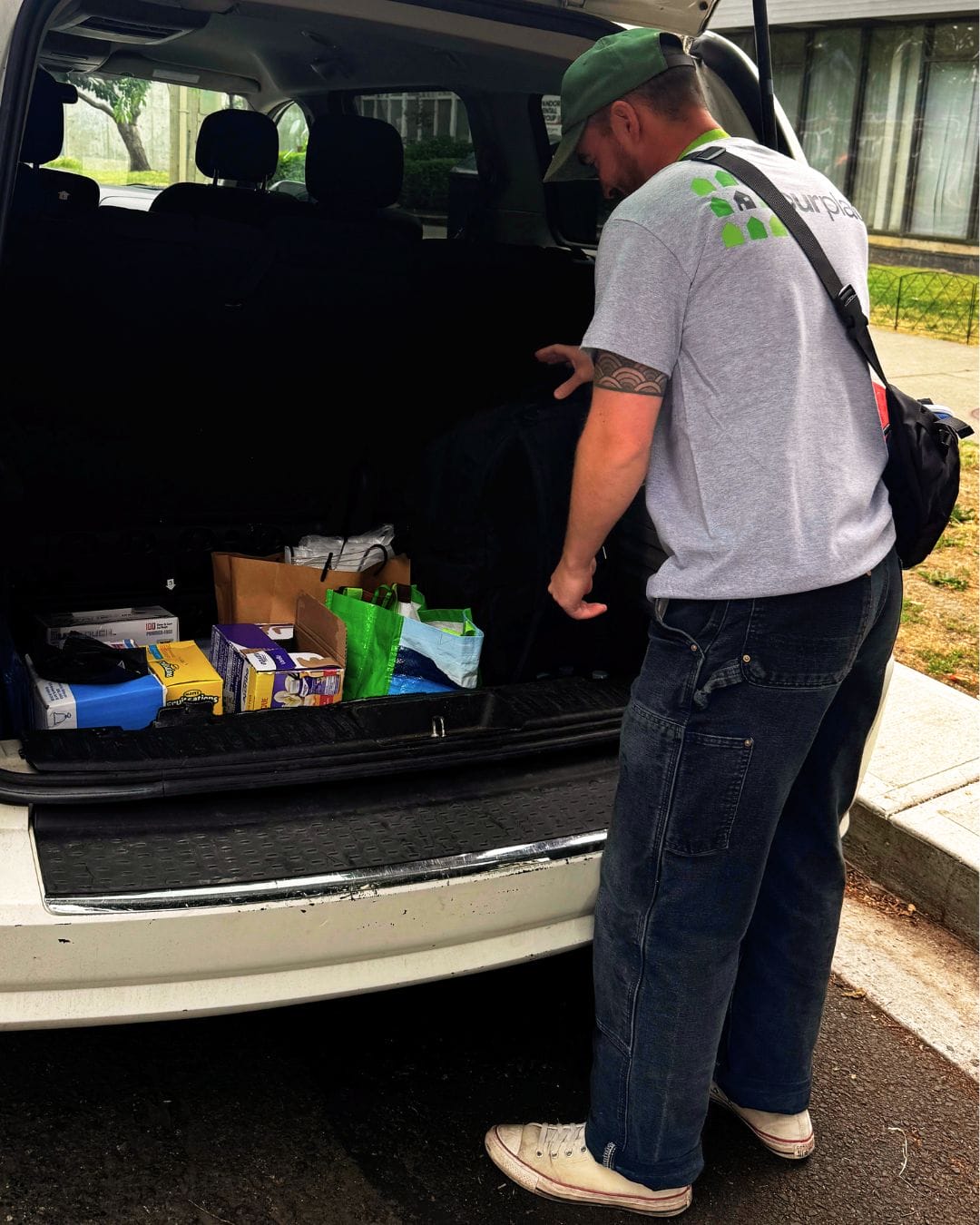
Every morning at 7 a.m., Derek and the Street Outreach Team also called the “Home Team“, begin their day with one purpose: reaching people where they are. As Victoria wakes up, they’re already out in the community, building trust, offering support, and opening the door to services that can change lives.
They begin on Pandora Avenue, moving block by block and checking in with people they know by name. Some are rolling up sleeping bags after a night outdoors. Some are still asleep. Others are already preparing for another day of surviving on the streets.
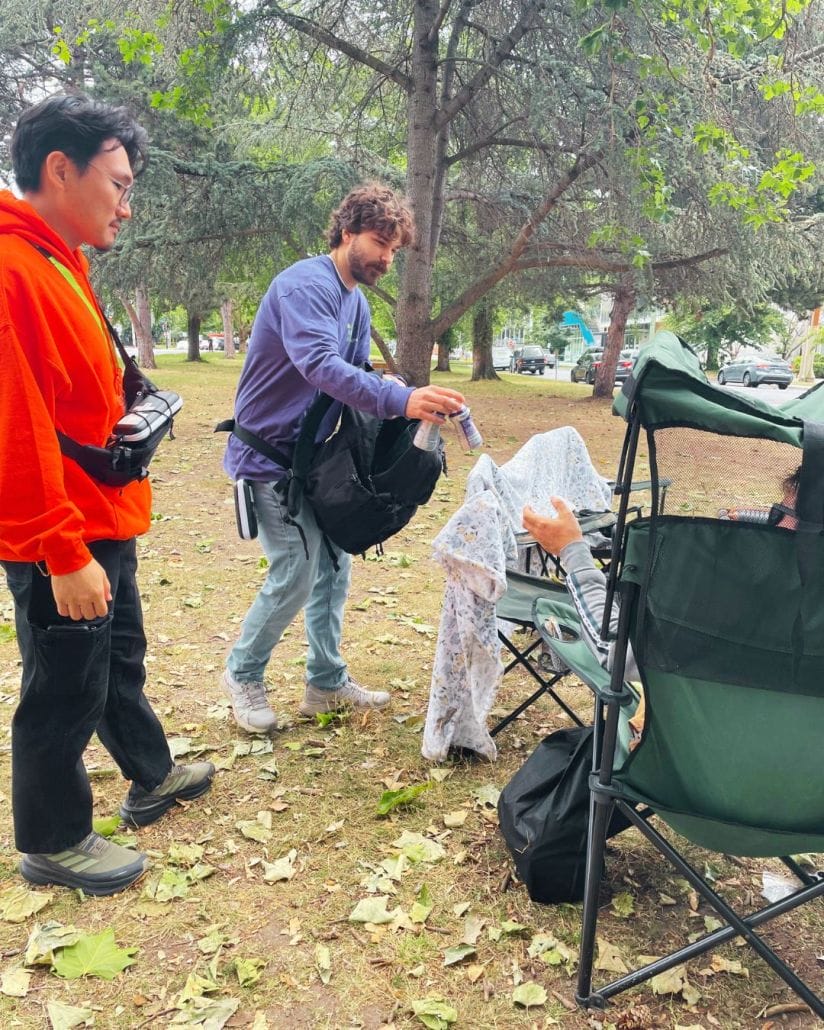
Derek carries a backpack stocked with snacks, water, hygiene supplies, housing applications, referral forms, and other basic necessities. But the most important thing he brings is much harder to pack.
Trust.
“People don’t just appear on the street,” says Derek. “They have stories. They’ve been teachers, business owners, parents, students. They’ve lived full lives.”
Derek’s role is simple in theory but complex in practice: meeting people where they are and helping them take the next practical step. Whether someone is living on the street, at risk of losing their housing, or looking for greater stability, the Home Team meets people where they are and helps them navigate the path forward.
That requires more than knowing which forms to complete or which phone number to call. Derek and his team need to understand how different systems work, where the gaps are, and which options may still be available when the obvious route has not worked. They often have to be creative, persistent, and willing to approach a problem from several different directions to find a workable next step.
For some, that means accessing income assistance or registering for BC Housing. For others, it means connecting with healthcare, shelter, housing providers, or other community resources. The team also helps with housing applications, advocacy, and referrals to services that can support someone’s next step. Sometimes, it simply means stopping to ask how they are doing.
Building trust takes time.
Many of the people Derek meets have experienced trauma, loss, mental health challenges, substance use, or years of instability. Some have tried to access housing before and become discouraged by long waitlists. Others have been disconnected from services for so long that navigating the system feels impossible.
“We can’t rush people,” Derek explains. “The trust has to come first.”
That trust is built through consistency: showing up, learning someone’s name, remembering their story, and checking in day after day.
For some people, that relationship develops over weeks. For others, it can take months or even years before they are ready to take the next step.
When that moment comes, outreach workers are ready.
One woman Derek recently supported had been without stable housing for six years. In her early thirties and pregnant , she had spent years moving between temporary places to stay, sleeping outdoors, and trying to survive day by day. She had never had a place of her own. When a housing opportunity became available, Derek and the outreach team moved quickly to complete the necessary paperwork and advocate for her application.
Then they had to find her.
For several days, they searched the area where she usually stayed. Each time, they missed her. Finally, on the third day, they found her camp.
“We got to tell her she had been accepted,” Derek remembers. “She was really excited. She was grateful just to have a roof.”
Soon, she will move into a space with a bed, a washroom, and the stability she needs as she prepares to welcome her baby. That moment reflects the practical work of outreach.
Derek and the Home Team help people navigate systems that are often difficult to access without support. They complete applications, make referrals, follow up on housing opportunities, connect people with services, and keep looking when someone is difficult to find. They also have to understand how those systems connect, where they break down, and how to find another route when a person does not fit neatly into an existing process.
For this woman, that meant locating her quickly enough to secure her housing placement before the opportunity was lost.
For someone else, it may mean replacing identification, applying for income assistance, seeing a healthcare provider, finding a shelter bed, or coming to Our Place for a meal or shower. For those who need additional support, the Home Team also helps people get to medical appointments, court appearances, housing meetings, and other essential appointments, ensuring they can stay connected to the services they need.
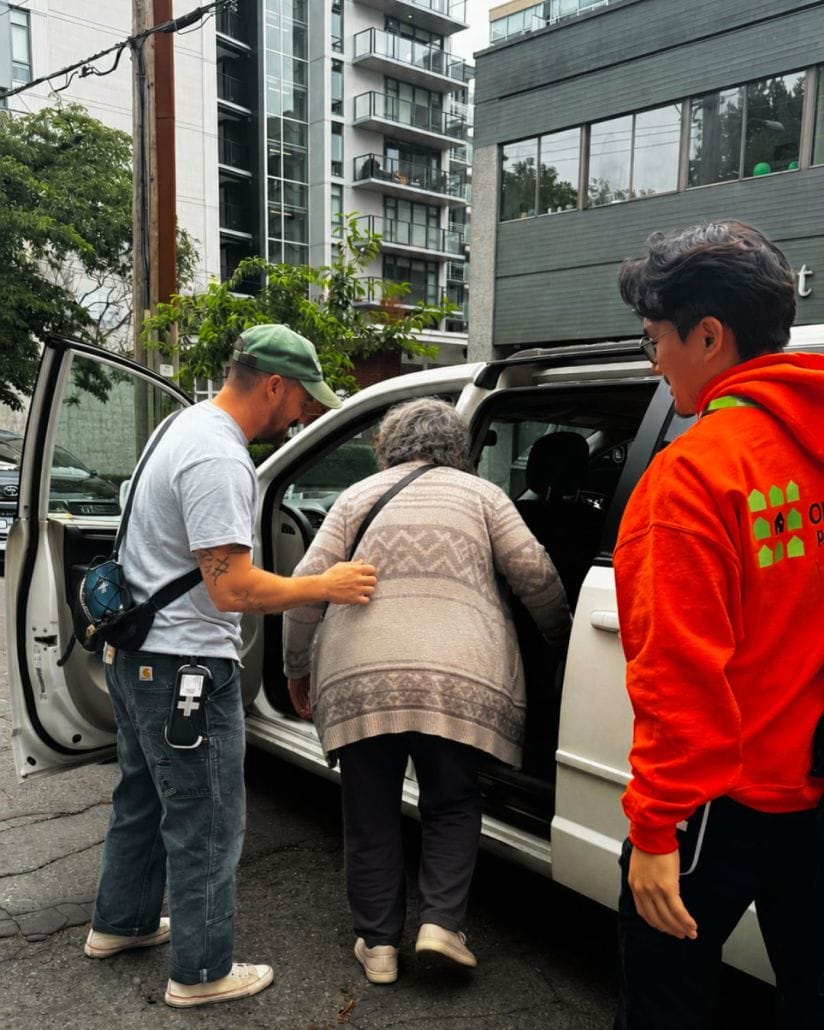
The team’s support doesn’t always end once someone is housed. They also help people transition into more independent living and continue providing tenancy support to help them build long-term stability.
That is why outreach matters. It provides a consistent point of contact for people who may otherwise be disconnected from services and support. Working alongside Our Place programs, BC Housing, landlords, healthcare providers, and other community partners, the Home Team helps remove barriers and create pathways toward lasting housing stability.
For many people, it is where their relationship with Our Place begins and their first step onto the Pathway of Support.
The Home Team doesn’t wait for people to come to them….they go to where people are.
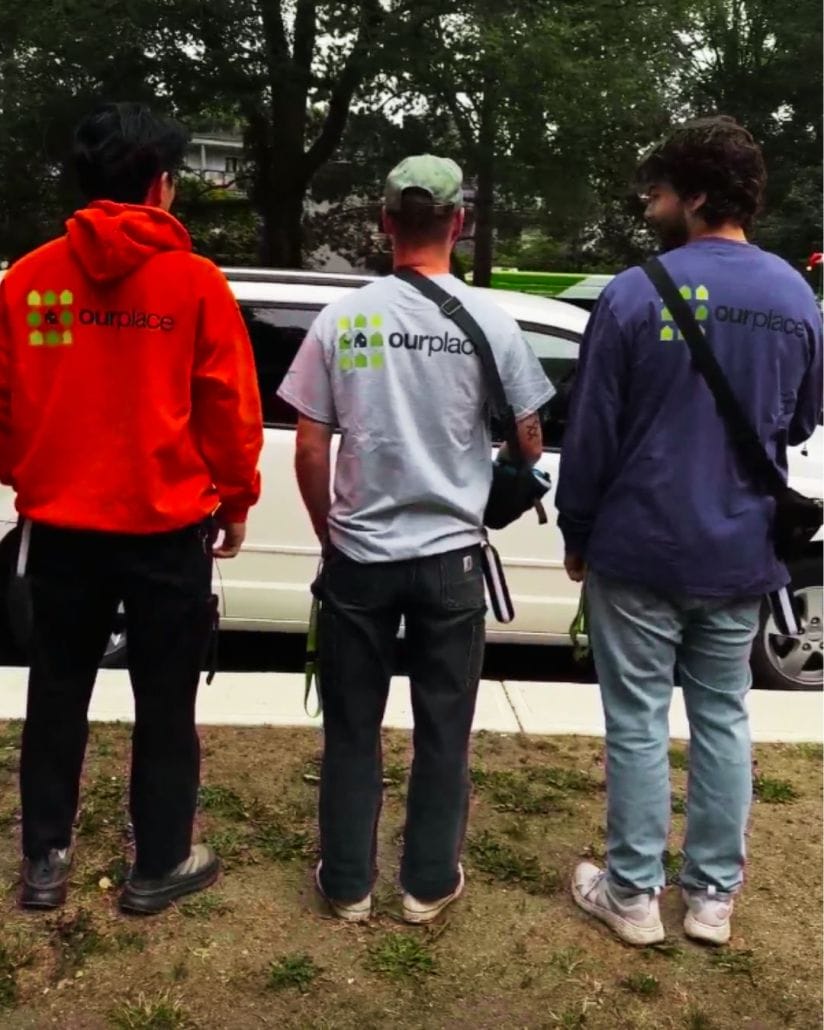
Want to know how our Community Outreach workers differ from our Street Outreach Workers ? Click below to find out!